“Where the First Footsteps Rest”
A Story of Unity at Old Methodist Cemetery, Chaplin, Kentucky
The wind moved gently through the fields of Old Methodist Cemetery, Chaplin, Kentucky—an old, quiet place where the nation’s earliest footsteps still rest. On this day, however, the silence gave way to something rare: every generation of American service, every lineage society, every men’s and women’s organization standing shoulder to shoulder to honor the long arc of sacrifice that shaped the United States.
They gathered not for one war, nor one soldier, but for the entire story of America’s beginnings, all buried in one sacred ground.
I. The First Defenders — The Revolution
The ceremony began with the earliest names—men who fought when the United States was only an idea whispered in taverns and carried on the backs of farmers.
Captain Jessie Davis 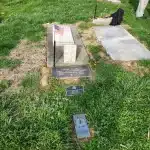
Captain William Kincheloe 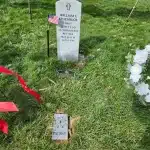
Captain Newell Beauchcamp 
Their service stretched back to the Revolution itself, when Kentucky was still a frontier and the nation’s future was uncertain. The Sons of the American Revolution—Isaac Shelby Chapter and Big Sandy Chapter—stood at attention, their color guard led by Scott Gilter, President of the Kentucky Society SAR, flags snapping in the breeze.
The ladies of the NSDAR—Cox’s Station, John Fitch, and Salt River Chapters, Thomas Nelson Jr Society NSCAR, River Raisin Chapter NSUSD 1812—placed flowers at the stones of these early captains, honoring the men who fought so the nation could be born.
II. The Second War for Independence — War of 1812
Next came the men who defended the young nation a second time:
Pvt. John Combs 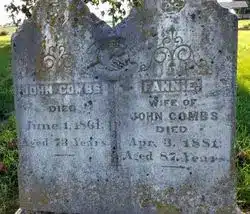
Major William Milton Davis 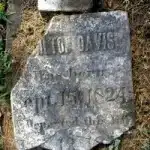
Sgt. Thomas Sims Graves 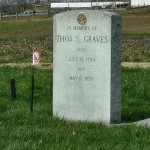
Members of the United States Daughters of 1812, Col. Yelverton Peyton Wells Chapter 508, stepped forward. Their ribbons and badges caught the sunlight as they honored the men who stood against invasion and helped secure America’s place among nations.
III. The Frontier and the Fight for Texas
The story moved westward—toward the struggle for Texas independence and the tragedies that followed.
Colonel James Wood, veteran of the Texas Revolution
James Wood, survivor of the Goliad Massacre, Captain William Parsons Miller’s command, 27 March 1836
l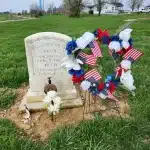
The Daughters of the Republic of Texas honored these men with solemn pride. Few stories in American history carry the weight of Goliad, and the crowd fell silent as the name was spoken. A survivor of that massacre rested here, in Kentucky soil—proof that history’s great tragedies often end far from where they began.
IV. The Mexican–American War
Two brothers were remembered next—sons of Kentucky who marched into a war that expanded the nation’s borders:
Newton Davis 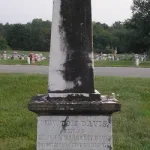
Lieutenant Thomas Jessie Davis 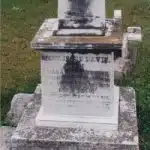
Their service bridged the years between early frontier wars and the coming national storm.
V. The Civil War — Blue and Gray Together
Then came the names that still echo through Kentucky’s hills:
Union Soldier, Pvt. William Vandyke, Co F 8th KY Cav 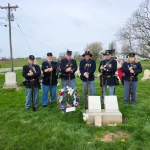
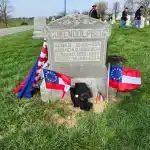
Confederate Soldier, Pvt. James K. Cokendolpher, Private, Company B, 2nd Kentucky Cavalry, Duke’s Old Squadron, Morgan’s Men
On this day, both were honored—because the purpose was remembrance, not division.
Members of the Sons of Union Veterans of the Civil War—Camp 5 (Elijah P. Marrs) and Camp 1 (Fort Duffield) stood in formation beside the Sons of Confederate Veterans.
The United Daughters of the Confederacy, Ben Hardin Helm Chapter 126 of Elizabethtown, placed flowers for Pvt. Cokendolpher.
The moment was powerful: Union blue and Confederate gray, standing not in opposition but in shared reverence for the men who lived, fought, and died in a war that reshaped the nation.
VI. The Ceremony of Many Hands
Though the men’s organizations provided honor guards, commands, and historical context, it was the ladies’ organizations who carried the ceremony with grace and leadership.
Their presence—DAR, UDC, USD1812, DRT—wove together the threads of America’s earliest generations.
The SAR color guard, joined by members of the SUVCW, SCV, and other heritage groups, presented arms in a unified salute. Flags of every era—13 stars, 15 stars, 28 stars, and the modern 50—stood together like a timeline made of cloth.
The cemetery, once quiet, now felt alive with centuries of American memory.
VII. One Cemetery, One Story, One Nation
Old Methodist Cemetery is not large, but on this day it held the weight of:
The Revolutionary War
The War of 1812
The Texas Revolution
The Goliad Massacre
The Mexican–American War
The Civil War—Union and Confederate
All in one place, all in one Kentucky hillside, all honored by descendants and patriots who refused to let their stories fade.
The ceremony closed with a single truth spoken aloud:
“Here lies the beginning of America. Here lies the price of its survival.”
And as the flags dipped in final salute, the wind carried the sound across the stones—across the centuries—reminding everyone present that the story of the United States is not written in books alone.
It is written in the ground beneath our feet.